What 475 Start-ups Reveal About the Future of Energy
The Start Up Energy Transition (SET) Award is back with a bang. This year saw 475 submissions: a 34% jump that compard to last year, signals renewed momentum in cleantech innovation. With global energy transition investment hitting a record $2.1 trillion in 2024 according to BloombergNEF, the timing couldn’t be better. But beyond the headline numbers, what do these applications actually tell us about where the energy transition is heading?
A Global, Maturing Ecosystem
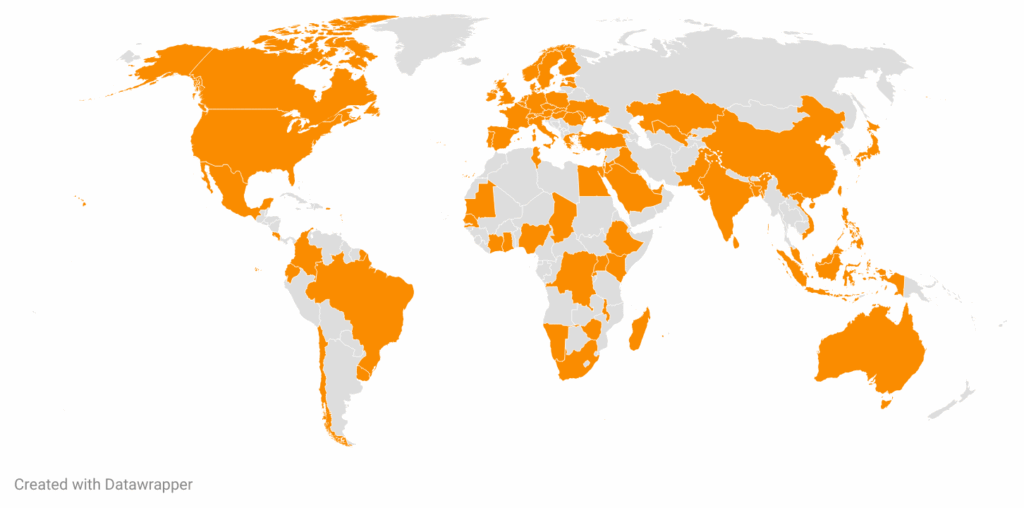
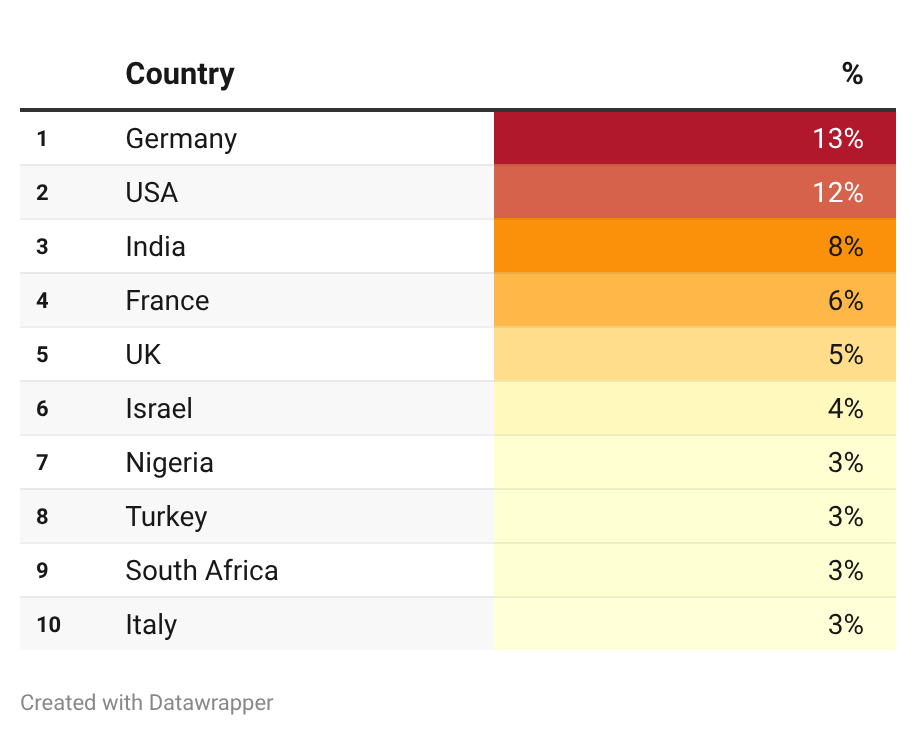
This year’s applicants span the globe. Germany led submissions with 62 applications (13%), followed by the United States with 57 (12%) and India with 36 (8%). Europe dominated overall at 47.6%, while Asia-Pacific contributed 13.7% and North America 13.1%. Notably, Africa accounted for 11.6% of applications, demonstrating growing innovation activity on the continent.
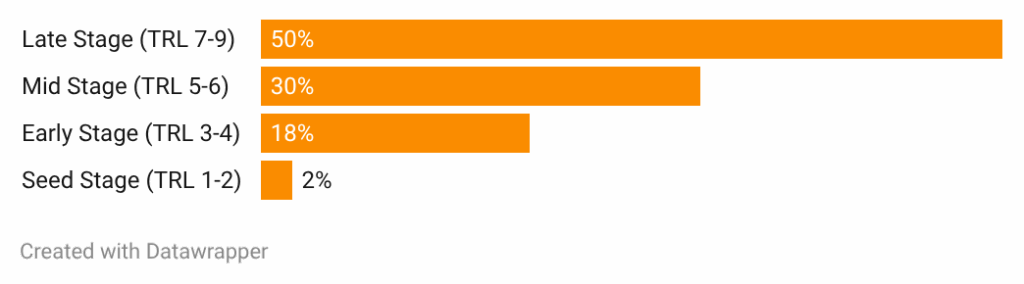
Perhaps more telling is the maturity shift. Half of all applicants (50.1%) are now Late Stage (TRL 7-9), representing technologies ready for deployment at scale. This marks a dramatic change from 2022, when Early Stage companies dominated at 44% and Late Stage represented just 2%. As Net Zero Insights noted in their State of Climate Tech report, funding is increasingly flowing toward later-stage, deployment-ready innovations. More banks and governments are backing scale-up projects, and investors are more prepared to support deployable solutions than they were a few years ago.
In short, climate tech start-ups are “growing up”: moving beyond prototypes toward real-world impact.
Founder Diversity: Progress, But Further To Go
On the diversity front, 37.5% of applicants reported having at least one founder who identifies as female, non-binary, or from an underrepresented group. This represents meaningful progress in an industry traditionally lacking diversity.
For context, the IEA reports that the energy sector is among the least gender-diverse globally, with women representing only about 11% of start-up founders. According to RMI, solo female founders receive only ~5% of climate tech deals. The SET data shows a higher ratio, perhaps because mission-driven energy start-ups attract more diverse teams.
Either way, there is clearly further to go for parity. A more diverse pool of founders can bring new perspectives and drive more inclusive solutions.
The Vocabulary of 2026
Three themes emerge clearly from the founder’s vocabulary: decarbonization (carbon, emissions, CO₂), circularity (waste, recycling, circular), and the digitalization of energy (AI, data, smart).
These aren’t peripheral buzzwords, they’re central pillars of how start-ups are tackling climate and energy challenges. According to IRENA, the digital transformation of energy systems is no longer optional but a “decisive enabler” of electrification and decarbonization. Research published in Scientific Reports confirms that achieving carbon neutrality requires integrating both circular economy principles and digitalization into the energy transition.
| Rank | Term | Mentions |
|---|---|---|
| 1 | Energy | 1,523 |
| 2 | Sustainable | 346 |
| 3 | Carbon | 324 |
| 4 | Clean | 319 |
| 5 | Power | 299 |
| 6 | Solar | 275 |
| 7 | AI | 267 |
| 8 | Waste | 261 |
| 9 | Emissions | 247 |
| 10 | Renewable | 246 |
Additionally, with 267 mentions, AI ranked 7th among all buzzwords – ahead of established terms like “renewable” (246) and “battery” (167). This represents a significant shift in how founders are building their solutions.
Start-ups are leveraging AI for smart grid management, real-time energy optimization, predictive maintenance, and intelligent EV charging. As renewable generation and electric vehicles grow, managing the grid in real-time becomes exponentially more complex and founders are stepping up with digital platforms to match supply and demand dynamically.
As the World Economic Forum notes, the rise of generative AI is even reshaping electricity demand patterns through data centers and computational infrastructure, pushing the need for smarter energy management solutions. AI has firmly established itself as critical infrastructure for the energy transition – not just an add-on, but foundational technology.
Six Themes Defining SET Award 2026
1. AI & Smart Energy Management
Keywords: AI, data, real-time, grid, EV, charging, management
The intersection of artificial intelligence and energy systems is a dominant theme. Start-ups are building digital platforms for smart grid management, real-time optimization, and intelligent EV charging, mirroring the broader industry view that the power sector’s digital transformation is essential to enable high shares of renewables and electric mobility.
2. Carbon Capture & Climate Tech
Keywords: Carbon, CO₂, emissions, capture, fuel, climate, scale
Many start-ups are directly targeting greenhouse gas removal through carbon capture and storage, carbon utilization, direct air capture, and low-carbon fuels. These solutions are moving from pilot stage to commercial scale. However, according to BloombergNEF, emerging areas like CCS, hydrogen, and clean industrial processes accounted for only ~7% of energy transition investment in 2024, illustrating both the challenge and the opportunity ahead.
3. Energy Storage & Renewables
Keywords: Storage, battery, power, renewable, wind, generation
The backbone of the energy transition. Many applicants are working on battery innovations, grid storage solutions, and improved renewable generation tech. According to BloombergNEF, investment in battery energy storage grew over 20% in 2024 to exceed $50 billion, with energy storage hitting a record $54 billion despite economic headwinds. These start-ups are building the capacity to ensure clean power can be generated in abundance and delivered when and where it’s needed.
4. Buildings & Thermal Solutions
Keywords: Heat, cooling, heating, solar, water, building, construction
These start-ups are tackling the significant energy demands and emissions from buildings, developing next-generation heat pumps, thermal storage, smart building energy management, and low-carbon construction materials. The IEA has noted that virtually all buildings must be zero-carbon by 2050 to stay on a 1.5°C path. Founders here are addressing this from multiple angles: technological (smarter devices, IoT), materials (carbon-sequestering concrete, better insulation), and operational (software to optimize building energy use).
5. Clean Energy Access (SDG7)
Keywords: Clean energy, solar, communities, affordable, green, climate
This category stands apart with its focus on affordable clean energy for underserved populations. Terms like “communities,” “affordable,” “rural,” “farmers,” and mentions of Africa are prevalent. The need is enormous: according to the IEA, 685 million people worldwide still lived without electricity in 2022, and progress toward universal access has recently stalled. These start-ups are on the front lines, delivering solar home systems, mini-grids, and clean cooking solutions to ensure the energy transition leaves no one behind.
6. Industrial Decarbonization & Circular Economy
Keywords: Hydrogen, waste, circular, materials, industrial, production
Start-ups addressing heavy industry – steel, cement, chemicals, manufacturing, and waste management – form a critical cluster. “Hydrogen” appears frequently, reflecting the growing role of green hydrogen as a fuel and feedstock for industrial decarbonization. BloombergNEF projects up to 16 million tons of clean hydrogen capacity by 2030. The prominence of “waste” and “circular” indicates a strong push to turn waste into resources, enabling a circular economy alongside deep decarbonization.
Inside the Categories




Clean Energy & Storage (173 submissions)
The largest category emphasizes hydrogen, storage, and grid integration. Many companies are working on green hydrogen production, fuel cells, and battery innovations ranging from new chemistries to second-life reuse. AI and digital optimization appear frequently, reflecting that managing distributed energy resources requires smart software. With solar PV alone attracting about $500 billion in 2024 according to BloombergNEF, start-ups here have an opportunity to ride a massive wave of demand.
Industry (84 submissions)
Applications are rife with “carbon,” “emissions,” “heat,” and “CO2 capture.” The circular economy theme runs strong: innovations in recycling industrial waste or substituting raw materials with recycled alternatives. Industrial heat is a key focus area, as it’s notoriously difficult to decarbonize. Heavy industry accounts for roughly 30% of global CO₂ emissions and will require breakthrough technologies to transform.
Quality Energy Access / SDG7 (66 submissions)
Off-grid solar companies feature prominently, with terms like “pay-as-you-go” and “microgrid” appearing regularly. According to the IEA, after years of progress, the number of people without electricity actually rose in 2022 to 685 million. Without accelerated effort, an estimated 660 million may still lack electricity in 2030. These start-ups are working to reverse that trajectory.
Mobility & Transportation (60 submissions)
Dominated by EV charging innovations – smart charging software, vehicle-to-grid (V2G) solutions, and charging hardware for underserved areas. As EV adoption accelerates, EVs could account for 6–8% of electricity demand by 2035, up from only ~0.5% today according to the IEA. These start-ups are ensuring that the entire system from charging networks to grid capacity can support the electrification wave.
Buildings & Construction (56 submissions)
Heavy emphasis on thermal management (heat pumps, waste heat recovery, smart thermostats), materials (low-carbon concrete, sustainable building materials), and water efficiency. The goal: making buildings greener and more energy-efficient without sacrificing comfort – a key innovation in the built environment.
The Road Ahead: Smarter Energy, Not Just New Hardware
These 475 start-ups point to one overarching trend: the future of energy isn’t just about replacing old systems with new hardware. It’s about making existing infrastructure smarter.
The applicant pool is more mature (50% Late Stage), more global, and more technically sophisticated than in previous years. AI has firmly entrenched itself in almost every category as enabling infrastructure. The competitive battleground has shifted to cost reduction, deployment speed, and demonstrating real-world impact at scale.
According to S&P Global, clean energy investment is on track to surpass fossil fuel investment for the first time by 2025. The trends in these 475 applications echo that momentum: clean electrification is surging, harder-to-decarbonize sectors are finally getting innovation attention, and circular economy principles are increasingly baked into new business models.
With nearly 4,500 total applications received across nine years from over 100 countries, the SET Award has established itself as a premier window into global energy innovation. If these 475 start-ups are any indication, the future of energy is digital, distributed, and designed for a circular economy all while striving to be equitable.
The energy transition won’t be defined by a single breakthrough but by thousands of connected, intelligent decisions shaping a more resilient and sustainable world.
References
- BloombergNEF, Energy Transition Investment Trends 2025 https://assets.bbhub.io/professional/sites/24/951623_BNEF-Energy-Transition-Trends-2025-Abridged.pdf
- Net Zero Insights, State of Climate Tech 2023 https://netzeroinsights.com/state-of-climate-tech-2023/
- International Energy Agency (IEA), Understanding Gender Gaps in the Energy Sector https://www.iea.org/spotlights/understanding-gender-gaps-in-the-energy-sector
- Rocky Mountain Institute (RMI), How to Beat the Market in Climate Tech? Invest in Women https://rmi.org/how-to-beat-the-market-in-climate-tech-invest-in-women/
- World Economic Forum, Digital Power Systems ‘Essential’ – and More Energy Stories (IRENA report) https://www.weforum.org/stories/2025/11/digital-power-system-transformation-essential-energy-stories/
- Zhang, Mingyue et al. (2025), Achieving Carbon-Neutral Economies Through Circular Economy, Digitalization, and Energy Transition, Scientific Reports (Nature) https://www.nature.com/articles/s41598-025-97810-w
- World Economic Forum, 4 Key Trends to Watch in Clean Energy Technology in 2025 https://www.weforum.org/stories/2025/01/4-key-trends-to-watch-in-clean-energy-technology-in-2025/
- International Energy Agency (IEA), Buildings – Energy System https://www.iea.org/energy-system/buildings
- International Energy Agency (IEA), Progress on Basic Energy Access Reverses for First Time in a Decade https://www.iea.org/news/progress-on-basic-energy-access-reverses-for-first-time-in-a-decade
- International Energy Agency (IEA), Global EV Outlook 2024 – Outlook for Battery and Energy Demand https://www.iea.org/reports/global-ev-outlook-2024/outlook-for-battery-and-energy-demand
- S&P Global Commodity Insights, Top Cleantech Trends for 2025 https://www.spglobal.com/content/dam/spglobal/ci/en/documents/news-research/special-reports/top-cleantech-trends-for-2025.pdf